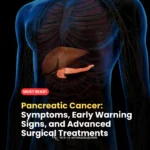
Pancreatic Cancer: Symptoms, Early Warning Signs, and Advanced Surgical Treatments
Receiving a diagnosis of pancreatic cancer, or even suspecting it, can be an overwhelming experience. It is a serious condition, but medicine has advanced significantly in recent years. Understanding the disease, recognizing the symptoms early, and knowing your surgical options are the most powerful steps you can take.
As a leading surgical team specializing in complex abdominal oncology, our expert team is here to help you navigate this journey. We provide personalized surgical solutions, including advanced robotic procedures, to offer the best possible outcomes for our patients.
Free WhatsApp Consultation:
Contact us now! 👉 +90 530 489 94 74

What Is Pancreatic Cancer? Understanding the Basics
Pancreatic cancer occurs when abnormal cells in the pancreas begin to grow out of control and form a tumor. The pancreas is a vital organ located behind the stomach. It has two main jobs: helping digestion by making enzymes and regulating high blood sugar by producing insulin.
Because the pancreas is located deep inside the abdomen, early tumors can be difficult to feel or detect during a routine check-up. This is why knowing the subtle warning signs is so important. While it is a challenging disease, surgical removal of the tumor remains the most effective path toward a cure.
What are the early warning signs of pancreatic cancer?
The early signs can be vague, but look out for yellowing of the skin and eyes (jaundice), dark urine, pain in the upper abdomen that radiates to the back, unexplained weight loss, and a new diagnosis of high blood sugar (diabetes) without weight gain.
Surgical Treatment: The Whipple Procedure and Beyond
Surgery is currently the only treatment with the potential to cure pancreatic cancer. However, not every patient is immediately eligible for surgery. The goal is to completely remove the tumor. The type of surgery depends entirely on where the tumor is located within the pancreas.
- The Whipple Procedure (Pancreaticoduodenectomy): This is the most common surgery for pancreatic cancer. It is performed when the tumor is in the “head” of the pancreas. The surgeon removes the head of the pancreas, the gallbladder, part of the stomach, part of the small intestine, and the bile duct. This is a complex operation that requires a highly experienced surgeon.
- Distal Pancreatectomy: This is performed when the tumor is in the “body” or “tail” of the pancreas. In this procedure, the surgeon removes the left side of the pancreas and often the spleen.
- Total Pancreatectomy: In rare cases, the entire pancreas must be removed.
At our clinic, we utilize robotic surgery technologies whenever possible. This allows for greater precision, smaller incisions, and a faster recovery compared to traditional open surgery.
Free WhatsApp Consultation:
Contact us now! 👉 +90 530 489 94 74
Is pancreatic cancer curable?
Pancreatic cancer is potentially curable if it is caught early and the tumor can be completely removed by surgery. Early detection and choosing a specialized surgeon for complex procedures like the Whipple procedure are critical factors for long-term survival.
Why Choose Prof. Dr. Oguzhan Karatepe for Pancreatic Cancer Surgery?
Pancreatic surgery is widely considered one of the most difficult and complex fields in general surgery. It requires a surgeon with exceptional skill, precision, and experience. Prof. Dr. Oguzhan Karatepe is a leading authority in this field, with over 25 years of experience and a track record of more than 3,000 surgeries performed.
Unlike general surgeons who perform these procedures occasionally, Prof. Dr. Karatepe specializes in complex abdominal oncology, including liver, stomach, and pancreatic cancer. He is an expert in robotic and laparoscopic surgery, techniques that can significantly reduce recovery time and trauma for the patient. His academic background, with hundreds of national and international publications, ensures that your treatment plan is based on the latest medical science. When facing a complex diagnosis, you need a surgeon who has the expertise to handle even the most challenging cases.
How to choose the right pancreatic cancer surgeon?
You should look for a surgeon who specializes in hepatobiliary and pancreatic surgery. Ask about their volume (how many Whipple procedures they perform a year), their complication rates, and their experience with minimally invasive (robotic/laparoscopic) techniques. High-volume surgeons typically have better patient outcomes.
Free WhatsApp Consultation:
Contact us now! 👉 +90 530 489 94 74
Frequently Asked Questions (FAQ) About Pancreatic Cancer
Q: What causes pancreatic cancer?
A: The exact cause is unclear, but risk factors include smoking, chronic inflammation of the pancreas (pancreatitis), a family history of pancreatic cancer, obesity, and older age. Having long-standing high blood sugar (diabetes) is also a risk factor.
Q: Can I live without a pancreas?
A: Yes, you can live without a pancreas, but you will need to take medication for the rest of your life. This includes taking enzyme pills to help digest food and insulin injections to regulate your blood sugar, as your body will no longer produce them naturally.
Q: What is the recovery time after a Whipple procedure?
A: The Whipple procedure is a major surgery. Most patients stay in the hospital for 7 to 10 days. Full recovery at home can take 6 to 8 weeks. Using robotic surgery techniques can sometimes shorten the hospital stay and speed up recovery.
Q: Is pancreatic cancer hereditary?
A: In some cases, yes. About 10% of pancreatic cancers are linked to inherited genetic mutations. If you have multiple family members with this cancer, or a history of breast or ovarian cancer (BRCA gene), you may be at higher risk.
Q: What is the difference between Stage 1 and Stage 4?
A:Stage 1 means the cancer is small and contained entirely inside the pancreas; this is the best stage for surgery. Stage 4 means the cancer has spread (metastasized) to other organs, such as the liver or lungs, and surgery is usually not the first option.
Q: Can robotic surgery be used for pancreatic cancer?
A: Yes. Prof. Dr. Oguzhan Karatepe is an expert in robotic pancreatic surgery. This method uses mechanical arms controlled by the surgeon to perform precise movements. It often results in less blood loss, less pain, and smaller scars than traditional open surgery.
Q: Does sugar cause pancreatic cancer?
A: There is no direct proof that eating sugar causes cancer. However, a diet high in sugar can lead to obesity and type 2 diabetes (high blood sugar), both of which are significant risk factors for developing pancreatic cancer.
Q: What happens if the tumor cannot be removed?
A: If the tumor involves major blood vessels or has spread, chemotherapy or radiation may be used first to try and shrink it. In some cases, this can make the tumor small enough to be surgically removed later.
Q: How do I book a consultation for pancreatic surgery?
A: You can contact our clinic directly. We will review your medical reports, CT scans, and MRI results to determine if you are a candidate for surgery. We offer personalized evaluations for international patients.
Legal Disclaimer
This information is for general educational purposes only and is not a substitute for professional medical advice. Always consult your doctor for diagnosis and treatment. For personalized treatment plans, please contact Prof. Dr. Oguzhan Karatepe directly.
Contact Us Today
Our expert team in pancreatic and abdominal oncology is ready to assist you. Early intervention is key. Contact us to discuss your options.
Free WhatsApp Consultation:
Contact us now! 👉 +90 530 489 94 74
How can I book an appointment?
You can contact us via phone, WhatsApp, or by filling out our online form. Our medical coordinators will guide you through the process of sending your medical records for review.