
Pancreatic Cancer Symptoms: 7 Early Warning Signs You Should Not Ignore
Pancreatic cancer is often called a “silent disease” because it can grow for a long time without causing any noticeable signs. By the time symptoms appear, they can be vague or easily mistaken for less serious tummy troubles. This is why education is our most powerful tool. Knowing what to look for can lead to earlier detection and better treatment options.
If you are worried about symptoms or have a family history of this condition, our expert team is here to help you. We provide comprehensive diagnostic evaluations and personalized surgical solutions for complex abdominal conditions.
Free WhatsApp Consultation:
Contact us now! 👉 +90 530 917 30 30
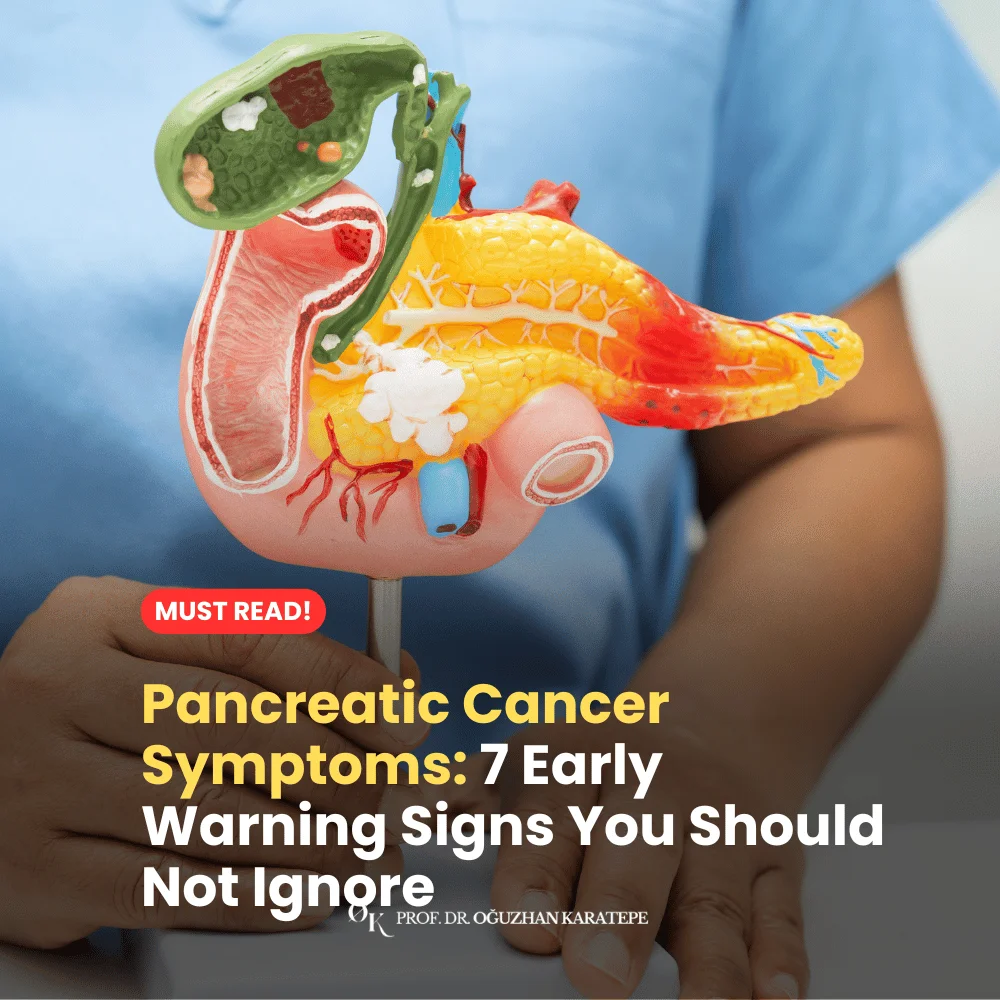
Why Is Pancreatic Cancer Hard to Detect Early?
The pancreas is an organ located deep inside your abdomen, hidden behind your stomach. It has two main jobs: making enzymes that help digest food and making hormones (like insulin) that manage your blood sugar levels. Because of its location, a doctor cannot feel a tumor during a standard physical exam. Furthermore, the early symptoms are often silent or very subtle.
What are the very first signs of pancreatic cancer?
The earliest signs are often non-specific. They typically include unexplained weight loss, a loss of appetite, vague abdominal discomfort, or a sudden change in blood sugar levels (diabetes) in a person who has never had weight issues.
The Most Common Symptoms of Pancreatic Cancer
While early signs are subtle, as the condition progresses, specific symptoms usually appear. Being aware of these can save lives.
1. Jaundice (Yellowing of the Skin and Eyes)
This is often one of the clearest warning signs. It happens when a tumor in the “head” of the pancreas blocks the bile duct. This causes bile to build up in the body. You might notice:
- Yellowing of the skin and the whites of the eyes.
- Dark urine: It may look like brown tea or cola.
- Pale or clay-coloured stools: Without bile, stools lose their normal brown colour.
- Itchy skin: Bile build-up can cause intense itching.
2. Abdominal and Back Pain
Pain is common. A tumor can press on nerves or nearby organs. Patients often describe this as a dull pain in the upper abdomen (belly) that radiates straight through to the back. The pain may get worse after eating or when lying down.
3. Digestive Issues and Weight Loss
If the pancreas cannot make enough digestive enzymes, your body cannot absorb nutrients from food properly. This can lead to:
- Significant, unintentional weight loss.
- Loss of appetite or feeling full after eating very little.
- Greasy or floating stools: This indicates that your body is not digesting fats properly.
4. New-Onset High Blood Sugar (Diabetes)
If you are suddenly diagnosed with high blood sugar (Type 2 diabetes) but do not have the usual risk factors (like being overweight), it could be a sign that a tumor is damaging the insulin-making cells in the pancreas.
Does back pain mean I have pancreatic cancer?
Most back pain is caused by muscle strain or spinal issues, not cancer. However, if you have pain in the upper abdomen that spreads to your middle back, especially if it is accompanied by weight loss or jaundice, you should see a doctor immediately.
Free WhatsApp Consultation:
Contact us now! 👉 +90 530 917 30 30
Why Choose Prof. Dr. Oguzhan Karatepe for Pancreatic Care?
If a diagnosis is confirmed, surgery is often the best chance for a cure. However, pancreatic surgery—specifically the Whipple Procedure—is one of the most complex operations in medicine. It requires a surgeon with exceptional skill and high-volume experience.
Prof. Dr. Oguzhan Karatepe is a leading General Surgeon with over 25 years of experience. He is not just a bariatric expert; he is a specialist in complex oncological (cancer) surgeries of the liver, pancreas, and stomach. Having performed more than 3,000 surgeries, including hundreds of successful cancer resections, he offers a level of expertise that ensures the highest safety standards.
Prof. Dr. Karatepe utilizes advanced technology, including robotic surgery, to perform these delicate procedures with maximum precision. This approach can lead to less blood loss and a faster recovery. When facing a complex diagnosis, you need a surgeon who can provide a comprehensive, multi-disciplinary approach to your care.
How to choose the right pancreatic surgeon?
You should look for a surgeon who specializes in hepatobiliary and pancreatic surgery. Ask about their experience with the Whipple procedure and minimally invasive techniques. High-volume surgeons like Prof. Dr. Karatepe statistically have better patient outcomes and lower complication rates.
Free WhatsApp Consultation:
Contact us now! 👉 +90 530 917 30 30
Frequently Asked Questions (FAQ) About Pancreatic Cancer
Q: What causes pancreatic cancer?
A: The exact cause is not always known, but major risk factors include smoking, chronic inflammation of the pancreas (pancreatitis), high blood sugar (diabetes), obesity, and a family history of the disease.
Q: Is pancreatic cancer painful?
A: It can be. As the tumor grows, it may press on nerves or organs, causing pain in the upper belly or back. However, early on, it is often painless, which is why paying attention to other signs like weight loss is crucial.
Q: Can a blood test detect pancreatic cancer?
A: There is no single blood test that can diagnose it on its own. However, doctors often check for a tumor marker called CA 19-9. High levels can indicate cancer, but it is used alongside CT scans and MRI for a confirmed diagnosis.
Q: What is the Whipple Procedure?
A: The Whipple procedure (pancreaticoduodenectomy) is a complex surgery to remove the head of the pancreas, the gallbladder, part of the small intestine, and part of the stomach. It is the primary surgical treatment for tumors located in the head of the pancreas.
Q: Is pancreatic cancer hereditary?
A: In some cases, yes. About 10% of cases are linked to inherited gene mutations (like BRCA2). If you have a strong family history of pancreatic, breast, or ovarian cancer, genetic counselling may be recommended.
Q: Can I prevent pancreatic cancer?
A: You cannot prevent it 100%, but you can lower your risk. The best steps are to quit smoking, maintain a healthy weight, and eat a diet rich in fruits and vegetables while limiting red and processed meats.
Q: What happens after a pancreatic cancer diagnosis?
A: A multidisciplinary team will review your case to see if the tumor can be removed surgically. If it can, surgery is usually the first step. If not, chemotherapy or radiation may be used to shrink the tumor first.
Q: How quickly does it spread?
A: Pancreatic cancer can spread (metastasize) relatively quickly to nearby organs like the liver or blood vessels. This is why immediate consultation with a specialist like Prof. Dr. Karatepe is vital upon noticing symptoms.
Legal Disclaimer
This information is for general educational purposes only and is not a substitute for professional medical advice. For personalized treatment plans, please contact Prof. Dr. Oguzhan Karatepe directly.
Contact Us Today
Our expert team is ready to assist you. If you are experiencing symptoms or have been diagnosed with a pancreatic condition, prompt action is essential. Contact us for a consultation with Prof. Dr. Oguzhan Karatepe.
Free WhatsApp Consultation:
Contact us now! 👉 +90 530 917 30 30
How can I book an appointment?
You can contact us via phone, WhatsApp, or by filling out our online form. Our medical team will review your case and schedule a consultation to discuss your options.